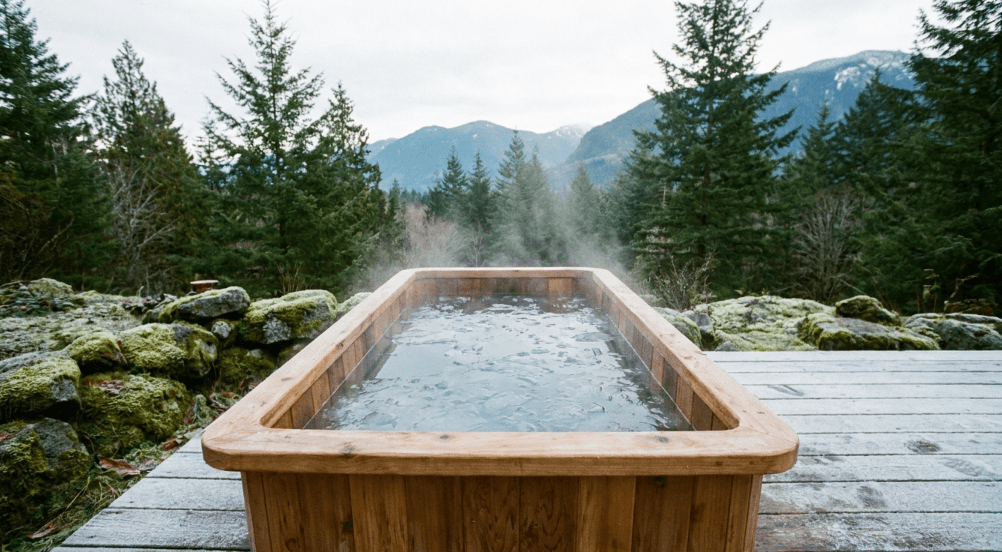
A dedicated chiller-equipped cold plunge tub is not the only way to get real cold water immersion at home. A cold shower, a stock tank filled with hose water and bagged ice, or a converted chest freezer with a temperature controller can all hold water in the same 39 to 55 degree Fahrenheit range a premium tub does, for a fraction of the cost. What changes between options is convenience and how much manual work goes into each session, not the water temperature your body actually feels.
What Does a Cold Shower Actually Deliver?
A cold shower is the zero-cost entry point, and it is a genuine form of cold exposure rather than a placebo version of one. Residential cold tap water typically runs somewhere between 50 and 65 degrees Fahrenheit depending on region and season, which sits within or close to the range most home plunge protocols target. The obvious limits are that you cannot fully submerge, sessions tend to be short by nature, and there is no way to dial in an exact temperature. Still, for someone deciding whether cold exposure is worth building a routine around before spending real money, two or three weeks of cold showers is a reasonable, honest test.
A slightly upgraded version of this option is an inline shower thermometer, which costs under $20 and clips onto the showerhead. It will not change what the water does, but it removes the guesswork about how cold the water actually is on a given morning, which matters if you are trying to track whether a specific temperature range feels different from a warmer one over a few weeks of testing.
How Does a Stock Tank Setup Compare on Cost?
A galvanized steel or heavy-duty plastic stock tank, the kind sold at farm supply stores, runs $150 to $400 depending on size, and holding it at plunge temperature means adding bagged ice before each session, usually four to eight bags for a 100-gallon tank depending on ambient water temperature. That works out to a few dollars per session in ice alone if you plunge often, which adds up over a season but still lands far below the $3,000 to $9,000 range for a chiller-equipped tub. Drainage is manual too, either a hose bib fitting or bucket-and-dump, so factor in the extra ten minutes per session that a chiller-equipped unit would automate away.
Is a Converted Chest Freezer a Serious Option?
It is a well-documented DIY route, though not for everyone. A used chest freezer, an external temperature controller wired between the freezer and the outlet, and a liner or direct-fill setup can hold water reliably in the high 30s to low 50s Fahrenheit, matching what a purpose-built chiller does. Total parts cost typically runs $200 to $600 depending on freezer size and controller quality, well under even an entry-level dedicated tub. The tradeoffs are real: it voids the freezer’s factory warranty, requires basic comfort with wiring a controller, and the compressor was never engineered for constant water contact, so expect a shorter working life than a chiller built specifically for plunge use.
What Should Pair With a Budget Cold Setup for Warming Back Up?
None of the warm-up side needs to be elaborate. A hot shower works fine for most people and costs nothing extra to already-owned plumbing. A small space heater in a bathroom or mudroom raises air temperature quickly enough to feel the difference within a few minutes. Anyone who already owns a home sauna has the most complete setup without adding anything, since alternating a short cold exposure with sauna heat is one of the more common home contrast routines. The heat side is genuinely the easier half of this to solve on a budget, since almost every household already has one workable option sitting unused.
Layering matters too. A robe or thick towel kept nearby, plus warm socks, shortens the uncomfortable window between stepping out of cold water and reaching an actual heat source, which is often the part beginners find hardest to push through. None of this requires spending money on specialty recovery gear, an ordinary bathrobe does the job the same way a marketed one would.
When Does the Upgrade to a Real Chiller Start to Make Sense?
Ice runs get old fast. Once a stock tank routine hits three or four sessions a week, the time spent buying and hauling ice starts to rival the time spent actually plunging, and that is usually the point where a dedicated chiller-equipped tub with built-in filtration starts to look worth the higher upfront cost. Buyers weighing that upgrade, and wanting to compare gallon capacity and chiller size against what a stock tank setup can realistically match, can explore the range of dedicated tubs before deciding whether the convenience is worth the jump in price.
What Does the Research Say About Whether the Setup Matters?
The physiological literature on cold water immersion does not distinguish between a stock tank and a premium tub, because none of it measures brand or price, only water temperature, duration, and outcomes. A 2025 systematic review and meta-analysis in PLoS One found a genuinely mixed picture across health and wellbeing outcomes tied to cold water immersion, not a uniformly positive one. A 2023 meta-analysis in Frontiers in Physiology on cold water immersion after exercise found some benefit for fatigue recovery and exercise performance, while a Cochrane review on cold-water immersion for muscle soreness found a modest reduction in soreness with notably low-certainty evidence behind several of the included trials. In other words, a well-run ice bath in a stock tank and a chiller-equipped tub set to the same temperature should be expected to produce a similar physiological response, since the research is tracking the water, not the equipment.
Frequently Asked Questions
What is the cheapest way to try cold water immersion at home?
A cold shower costs nothing extra. A stock tank with a few bags of ice per session usually runs under $150 total to start.
Do I need a chiller for cold water immersion to work?
No. The physiological response comes from water temperature and duration, not from how the water got cold.
How much warmer does a chest freezer conversion run compared to a full plunge tub?
A converted chest freezer with a controller can hold similar temperatures to a chiller-equipped tub, but it voids the freezer’s warranty and takes more setup work.
What do you pair with a budget cold exposure setup for warming back up?
A hot shower, a space heater, or an existing home sauna all work fine for the warm-up side.
When does it make sense to upgrade to a dedicated chiller-equipped tub?
Once you are plunging several times a week and tired of hauling ice, a dedicated unit with automatic chilling starts to pay for itself in time saved.
References
- “Effects of cold-water immersion on health and wellbeing: A systematic review and meta-analysis.” PLoS One, 2025. https://pubmed.ncbi.nlm.nih.gov/39879231/
- “Effects of cold water immersion after exercise on fatigue recovery and exercise performance: meta analysis.” Frontiers in Physiology, 2023. https://pubmed.ncbi.nlm.nih.gov/36744038/
- “Cold-water immersion (cryotherapy) for preventing and treating muscle soreness after exercise.” Cochrane Database of Systematic Reviews, 2012. https://pubmed.ncbi.nlm.nih.gov/22336838/